The Cathars in the Hérault: castles and fortified villages
When people think of the Cathars, they think first of the Aude and the Ariege. Carcassonne, Montsegur, Peyrepertuse. But the Herault was also caught up in the Albigensian Crusade (1209-1229). Beziers saw one of the bloodiest episodes. Minerve held out for seven weeks. And fortified castles dot the hills of the department.
A bit of history
The Cathars (or “good men”, as they called themselves) were a dissident Christian movement that appeared in the 12th century in the south of France. They rejected the Church of Rome, its wealth, its hierarchy. Their worldview was dualist: good (the spirit) against evil (matter). They lived austerely, preached in Occitan, and had won the sympathy of part of the nobility and population of the Languedoc.
In 1209, Pope Innocent III launched the crusade against the Albigensians. The official goal was to eradicate the heresy. The real goal, also, was to bring the lords of the Midi under the French crown. Simon de Montfort led the northern troops through the Languedoc.
Béziers, 22 July 1209
This is the best-known and most terrible episode. Beziers, 25 km from Florensac, was the first city besieged. The fall was swift. The city fell on the same day. The chronicles report a general massacre of the population, Cathars and Catholics alike.
It is in this context that the papal legate, Arnaud Amaury, is said to have uttered: “Kill them all, God will know his own.” The authenticity of the quote is debated by historians, but the massacre is documented. Estimates range from several thousand to 20,000 dead.
Today, the Cathedral of Saint-Nazaire in Beziers, perched on its promontory above the Orb, is still there. The Church of the Madeleine, where civilians had taken refuge before being killed, can also be visited. A commemorative panel records the events.
Minerve: seven weeks of siege
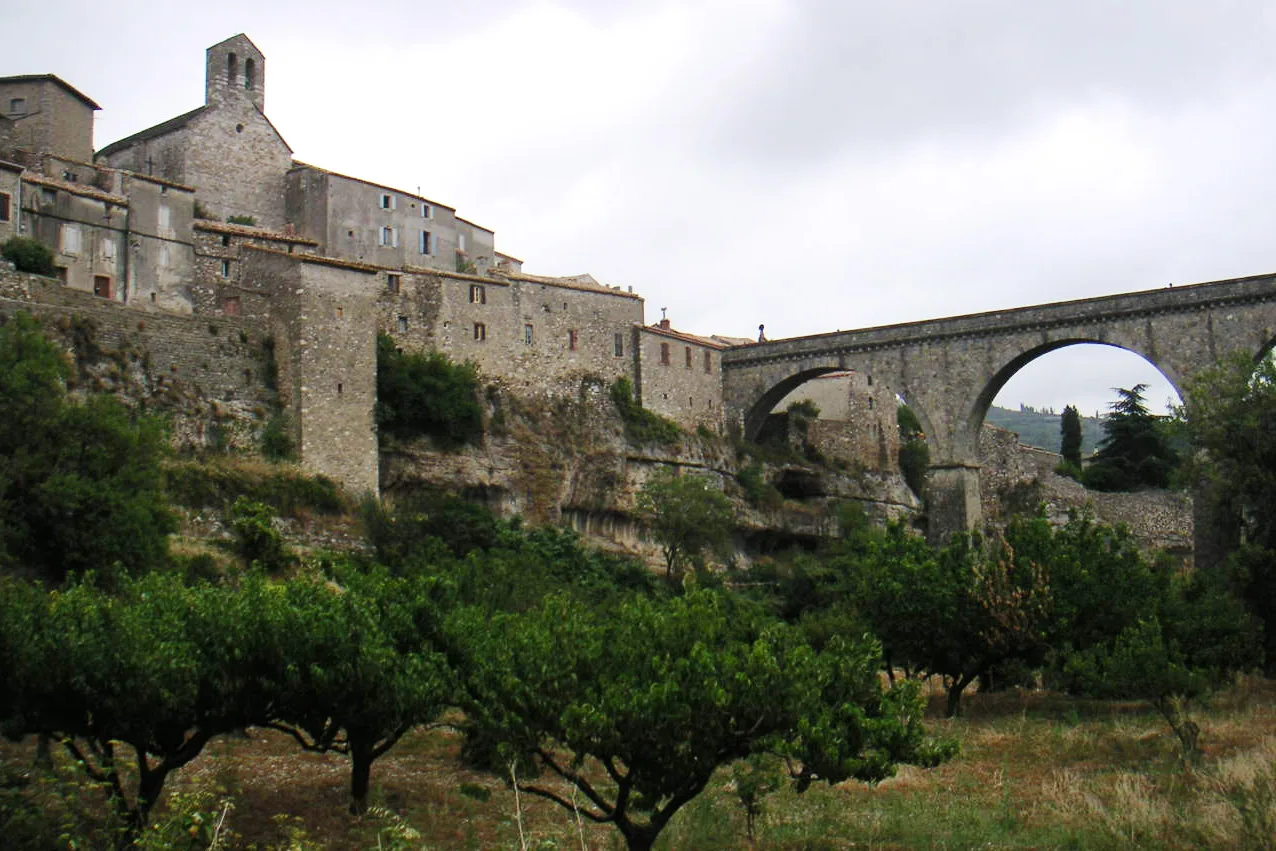
Minerve is 1 hour 15 minutes from Florensac, in the Minervois hills. The village is perched on a rocky spur between the gorges of the Cesse and the Brian. In 1210, Simon de Montfort besieged it. The site seemed impregnable, but the crusaders cut off the water supply by destroying the covered well at the foot of the cliff.
After seven weeks, the viscount of Minerve negotiated the surrender. Cathars who agreed to renounce their faith would be spared. 140 refused. They were burned alive. A stele in the shape of a dove, sculpted by Jean-Luc Severac, marks the site of the pyre.
The village is free to visit. A small museum, the Musee Hurepel, recounts Cathar history with models and information panels (5 euros). Outside, when the rivers run dry in summer, you can descend into the gorges and walk under the natural bridges carved by erosion.
The castles of the Hérault
The Herault does not have “Cathar castles” in the strict sense like the Aude (no Queribus or Puilaurens). But medieval fortifications linked to this period do exist.
The Château de Saissac
Technically in the Aude, but on the border with the Herault and reachable in 1 hour 30 minutes from Florensac. This ruined castle, on the edge of a ravine in the Montagne Noire, was confiscated from its Cathar lord by the crusaders. The ruins are impressive. You walk between the broken walls with views over the Lauragais plain. Admission: 5 euros.
The Château de Mourèze
The village of Moureze (40 min from Florensac) has a ruined medieval castle at its summit. It is not directly linked to the Cathars, but it dates from the same period and is the same type of fortification. The climb is steep. The view over the dolomitic cirque makes it worthwhile.
Montady (the Oppidum of Ensérune)
Twenty minutes from Florensac, the Oppidum of Enserune dominates the plain. It is not a Cathar castle, but a site occupied since antiquity, with a remarkable view of the medieval draining of the Etang de Montady (a fan-shaped pattern of fields, visible from above). The museum is interesting. Admission: 6 euros.
Further afield: the castles of the Aude
If the subject captures your interest, the great Cathar castles of the Aude are 1.5 to 2 hours away. They are worth the trip.
Carcassonne (1h15): the medieval city is a major site of the crusade. Simon de Montfort made it his base after its capture in 1209. It is very touristy in summer, but the ramparts and the Chateau Comtal are impressive. Arrive early or go in the off-season.
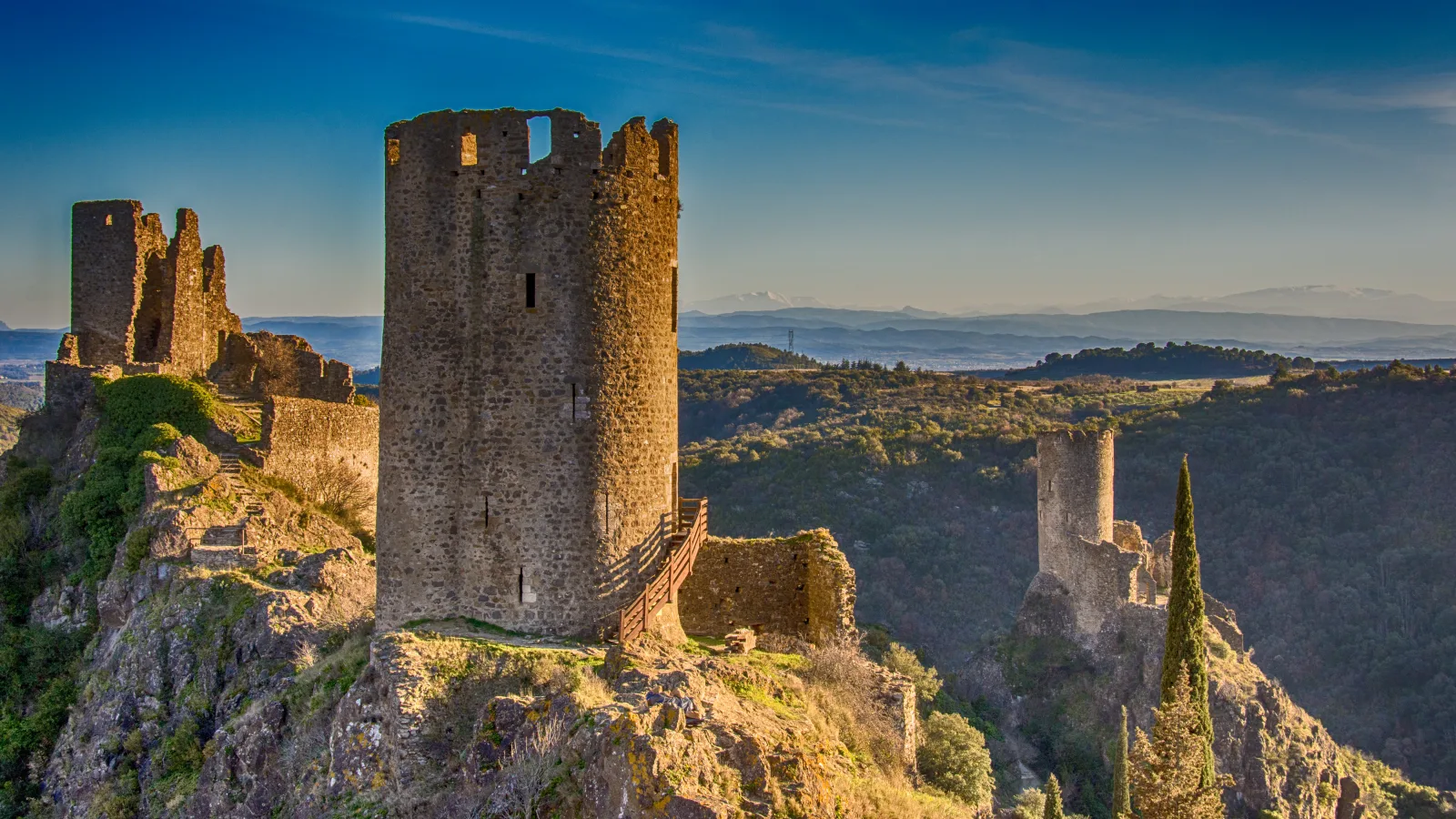
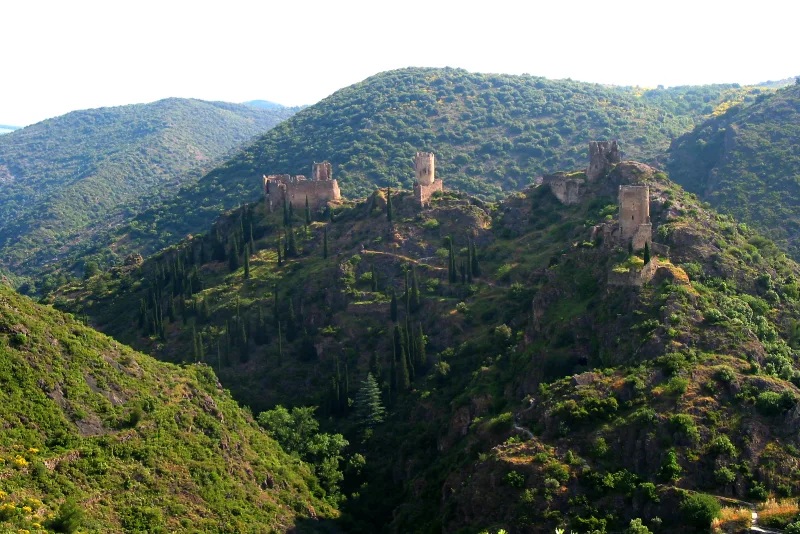
Lastours (1h30): four ruined castles on a ridge, facing each other. The view from the belvedere is spectacular. Fewer crowds than Carcassonne, more atmosphere.
Quéribus and Peyrepertuse (2h): the two most spectacular castles, perched on cliffs in the Corbieres. Queribus is considered the last Cathar stronghold (it fell in 1255). Peyrepertuse is the largest of the “five sons of Carcassonne”. You need good shoes and a head for heights.
Understanding the Cathars
To go beyond the “Pays Cathare” branding (which is mainly a tourism label for the Aude department), a few accessible reads: “La croisade contre les Albigeois” by Michel Roquebert (in French), or in English, “The Perfect Heresy” by Stephen O’Shea is a good introduction.
The Cathar studies centre in Carcassonne also publishes reference works. The history is complex, weaving religion, politics, war and Occitan identity. A couple of hours on a terrace with a good book and a glass of Minervois is a fine way to start.
Practical information
- Beziers: 25 km from Florensac, Cathedral of Saint-Nazaire free access
- Minerve: 1h15 drive, village free, Musee Hurepel 5 euros
- Enserune: 20 min, museum and site 6 euros
- Carcassonne: 1h15, Chateau Comtal 9.50 euros, ramparts free
- Lastours: 1h30, castle access 7 euros, belvedere free
- Queribus / Peyrepertuse: 2h, 7 to 9 euros per castle
Cathar history is present throughout the Languedoc, even if it is less visible in the Herault than in the Aude. From Florensac, Minerve and Beziers make easy day trips. Discover our rooms.