Festivals and traditions in Florensac
Florensac doesn’t put on a show for visitors. The celebrations here exist because the people of the village keep them alive, not to fill an events calendar. Some go back decades, others centuries. What they share is a link to the life of the village: the wine, the seasons, the community.
The fête votive (August)
This is the big one. It takes place in August, usually the first or second week, and lasts three to four days. The whole village turns out.
The programme varies a little from year to year, but the core stays the same. In the evening, there’s an outdoor meal on the square, organised by the village events committee. The tables are long, you sit next to people you know or don’t, and you eat together. The menu changes each year, but there’s always local wine, and it goes on late.
There’s a dance in the evening, a band or a DJ on the square. Fairground rides go up for the children. The fireworks, set off from the hill, are visible from far away. During the day, there are activities: games for children, sometimes a car boot sale.
What I like about the fête votive is that it’s not a performance. The people serving at the tables are village volunteers. The children run between the adults’ legs. The older generation stays up late. It’s a neighbours’ party, on a bigger scale.
Lo Chivalet, the totemic animal
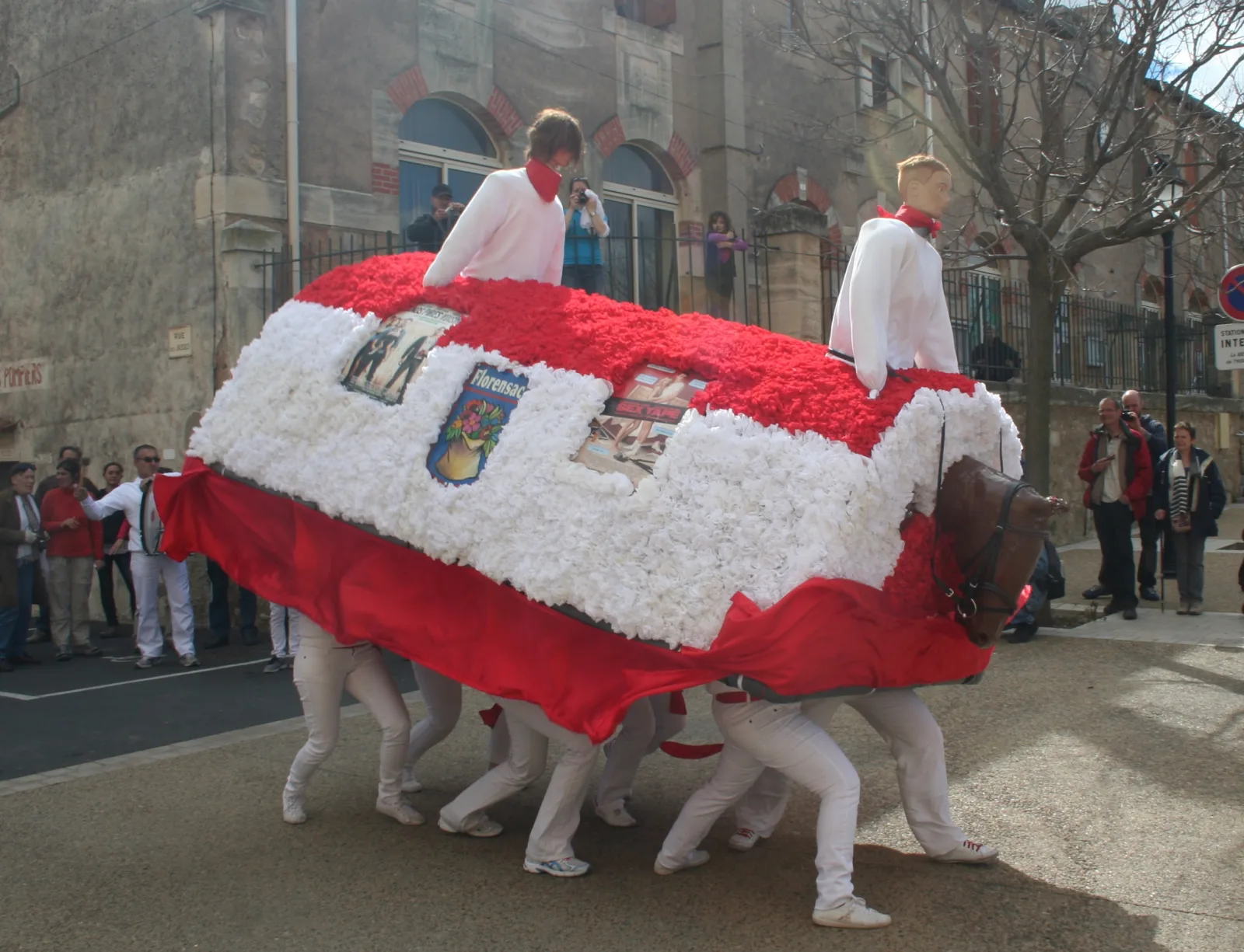
Every village in Languedoc has its own totemic animal. Pézenas has the Poulain. Montagnac has the Donkey. And Florensac has lo Chivalet, the little horse. It’s my favourite, obviously.
Lo Chivalet is a wooden horse framework carried by dancers hidden underneath. It comes out into the streets, accompanied by musicians, and it dances. It charges at the crowd, spins, pretends to kick. The children scream, the parents laugh, and the dancers underneath sweat. Carrying that thing is hard work.
The tradition is linked to the visit of King Charles IX to Florensac in 1565. The young king was on his grand tour of France with his mother Catherine de Medici. Florensac received him, and the Chivalet danced for him. At least, that is what the tradition says. Five centuries later, it still dances.
You can see it come out twice a year. At Carnival, in February or March, when the village dresses up and floats parade through the streets. And during the fête votive in August, where it often leads the procession. I remember being a little scared of it as a child, this big creature charging towards us in the street. Now it is one of the moments I look forward to most.
Lo Chivalet is not folklore frozen behind glass. It is a living thing, passed from one generation to the next. The dancers change, the music stays. And when it comes down the street, the people of Florensac know it is their animal, their village’s own. No other.
Saint-Jean bonfire (June)
The Saint-Jean bonfire is on June 24th. In Florensac, the tradition holds. A large fire is lit in the evening, on the square or at the edge of the village depending on the year. People come, stand around the flames, and talk.
It’s short. No official programme, no big organisation. Just a fire, neighbours, and the start of summer. My father Dédou used to say that the Saint-Jean marked the moment when you could finally take a breath between pruning the vines and the harvest. A pause.
The grape harvest (September)
The vendanges aren’t a festival in the usual sense, but they shape the rhythm of the village like nothing else. In September, Florensac changes. Tractors loaded with grapes cross the boulevard at all hours. The air smells of must, that sweet, slightly sharp smell that clings to your skin.
My father was a winemaker. My brothers still are. During the harvest, everyone talks about the same thing: the yield, the quality of the grapes, the weather. It’s the only subject for three weeks.
The cooperative cellar runs at full capacity. Trailers queue up at the unloading dock. It’s noisy, it smells strong, it’s alive. If you’re in Florensac in September, walk past the cellar late morning. You’ll see the winemakers waiting their turn, sitting on their tractors, and you’ll understand that wine here is not a boutique craft product. It’s the work of an entire village.
The Tuesday market
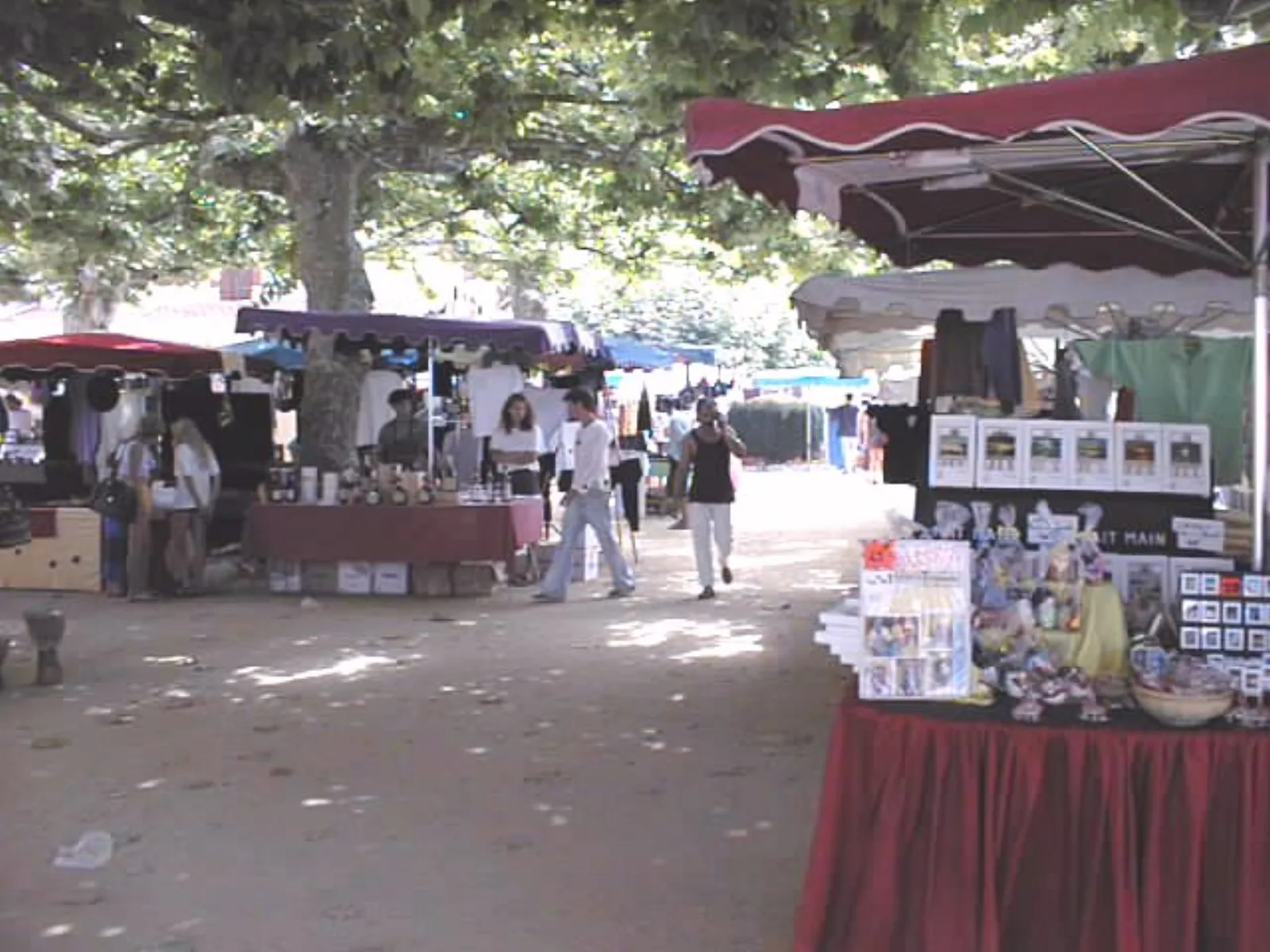
The market isn’t a festival, but it’s a weekly gathering that serves the same purpose: bringing people together. Every Tuesday morning, stalls set up on the Place de la République and the surrounding streets.
You’ll find local producers: seasonal fruit and vegetables, cheese, olives, honey, charcuterie. There are also clothes, household goods, flowers. It’s a real village market, not a curated farmers’ market.
The market winds down around 1pm. After that, the traders pack up, the square empties, and Florensac returns to its quiet self.
New oil celebration (winter)
In December or January, when the olives have been pressed, some estates in the area hold tastings of the new oil. It’s not specific to Florensac, but the surrounding villages take part. Lucques olive oil is a local specialty. It’s mild and fruity, and people here are proud of it.
The calendar, in short
The village has its rhythm. From March to May, the vines grow, the village is quiet. In June, the Saint-Jean bonfire. In July and August, the fête votive and the summer crowds. In September, the harvest absorbs all the energy. Autumn is calm, winter too. And on Tuesdays, all year round, the market.
This isn’t a tourist events calendar. It’s the life of a Languedoc wine village that keeps turning the way it has for a long time. My family has been here for over 200 years. The celebrations have changed shape, but the idea has stayed the same: people come together, eat together, and mark the passing of the seasons.
Practical information
- Fête votive: first or second week of August (3-4 days), communal meal, dancing, fireworks, fairground rides
- Lo Chivalet: comes out at Carnival (February-March) and during the fête votive (August)
- Saint-Jean bonfire: evening of June 24th
- Grape harvest: usually mid-September to early October
- Market: every Tuesday morning, Place de la République, until 1pm
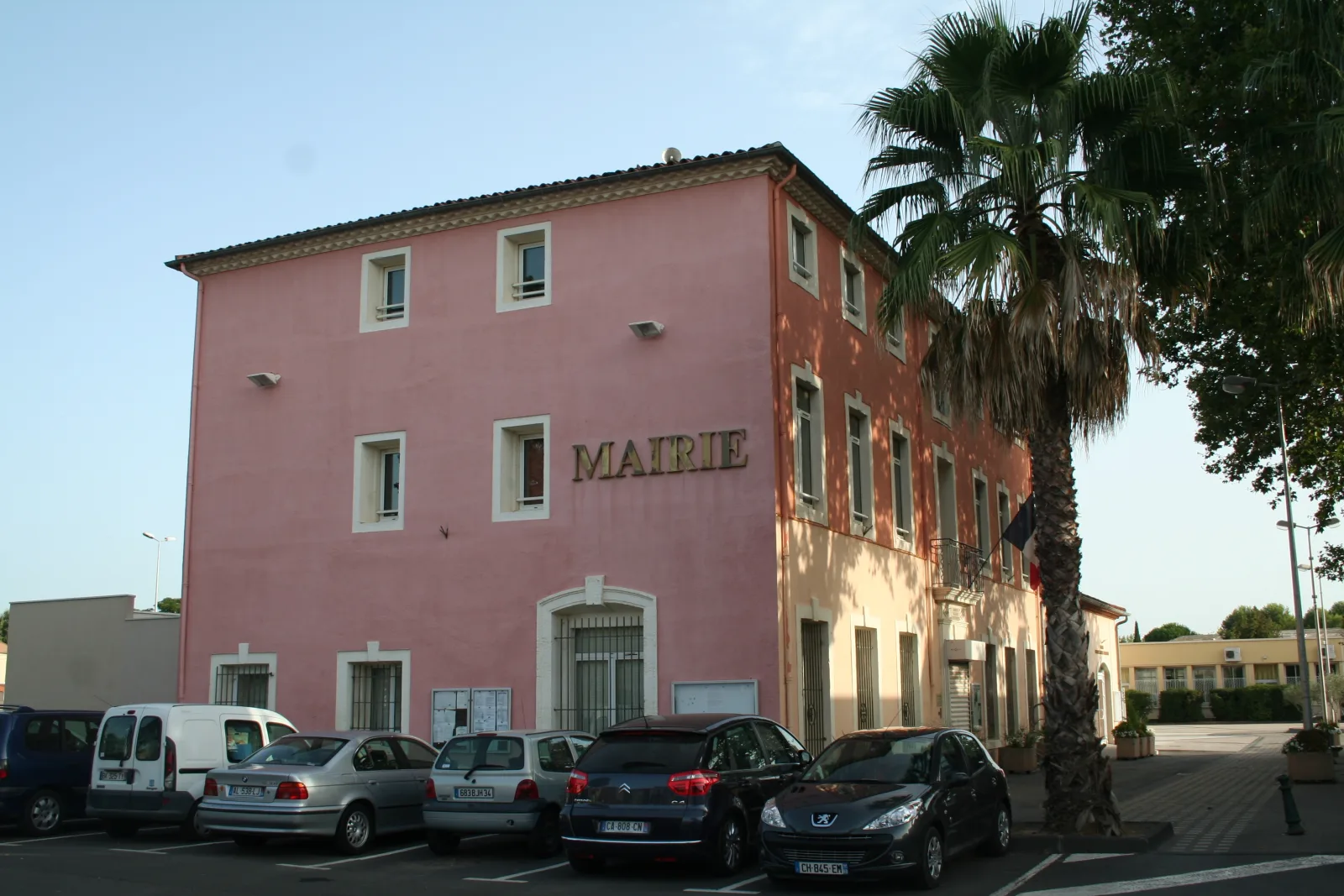
- Information: Florensac town hall (04 67 77 00 25) or Cap d'Agde Méditerranée tourist office
In August, during the fête votive, the village square is a five-minute walk away. You walk home after the fireworks, windows open to the warm night. See our rooms.