A day trip to Montpellier from Florensac
I go to Montpellier several times a year. For the Fabre museum, for the Arceaux market, or sometimes just to walk the Ecusson and eat at Halles Castellane. It’s 50 minutes from Florensac on the A75, and the contrast with the village is immediate: 300,000 people, students everywhere, something always happening.
Here’s how I’d use a single day there, start to finish.
Morning: the Ecusson and Place de la Comédie
Leave Florensac around 9am. You’ll be in Montpellier by 10am. Park at the Corum car park (underground, paid, about 2 euros per hour) or the Peyrou car park if there’s room. The city centre is pedestrianised, so once you’ve parked, you’re on foot for the day.
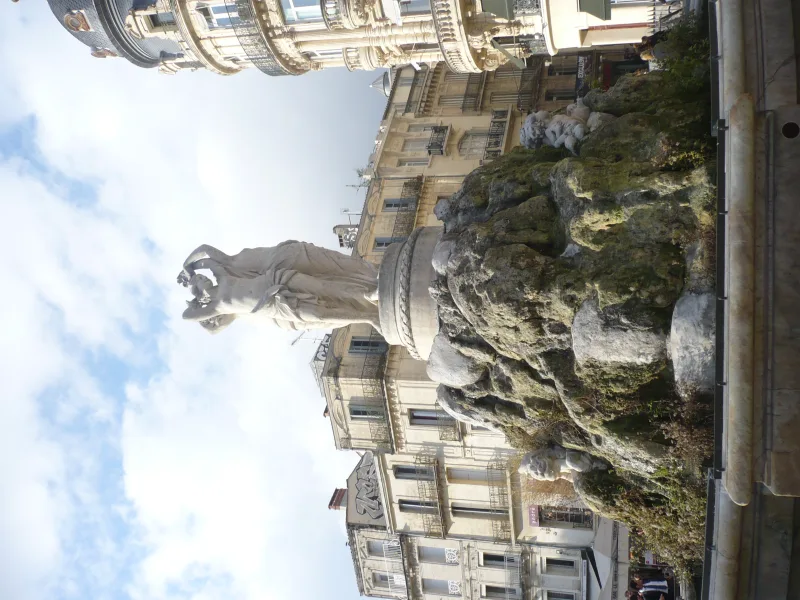
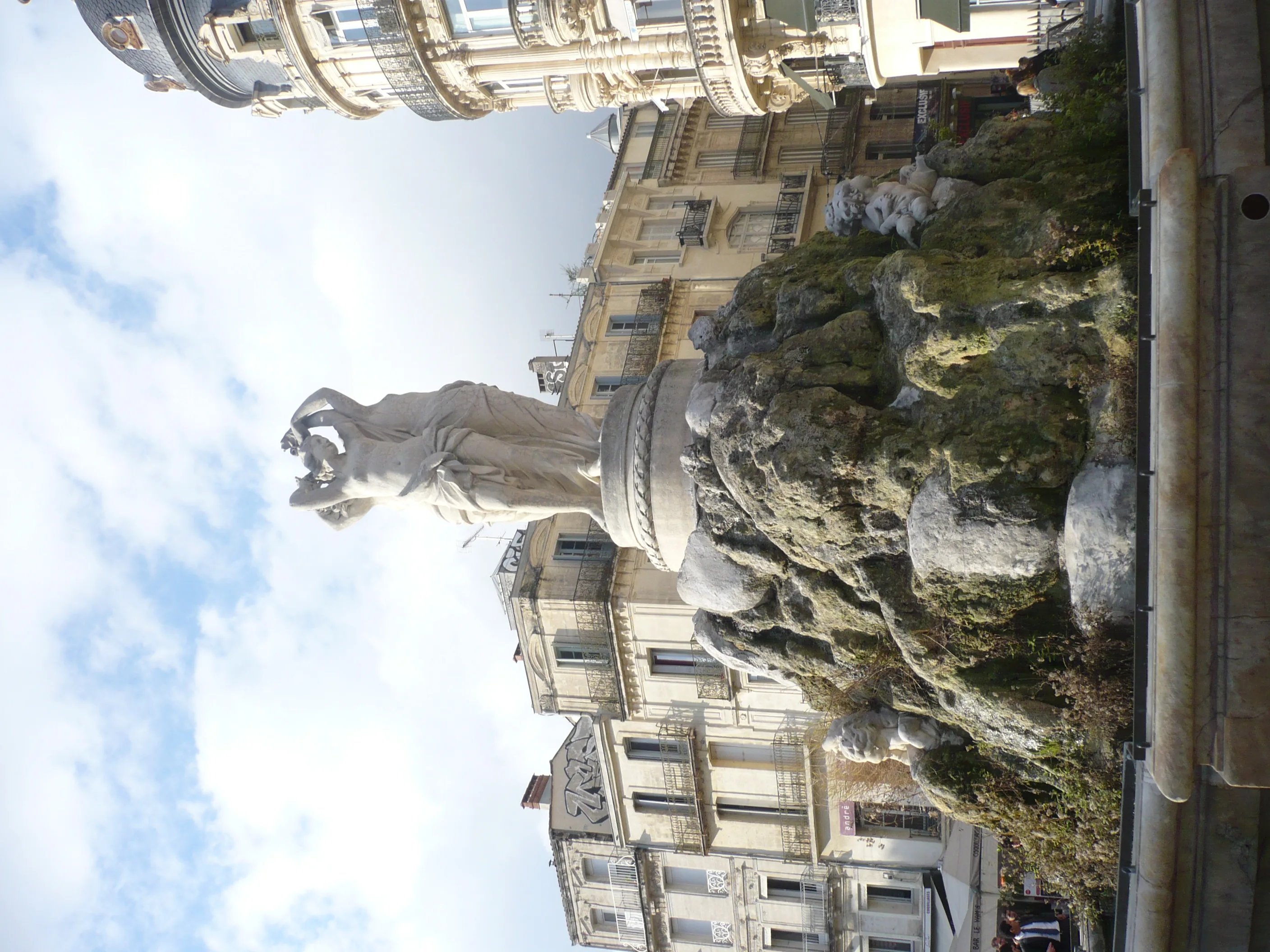
Place de la Comédie
Start here. It’s the heart of Montpellier. A large oval square, lined with cafe terraces, with the Three Graces fountain in the centre and the Opera House at the far end. It’s always busy, even early in the morning. Street musicians, people hurrying past, tourists getting their bearings.
A coffee on the square costs 2.50 to 3 euros. That’s the location premium. For less, take one of the side streets.
The Ecusson
This is the historic centre, inside the line of the old ramparts. A web of pedestrian lanes, shaded squares, and 17th and 18th-century mansions. What’s striking about Montpellier is the quality of the architecture. Push open a carriage door and you’ll find a monumental staircase with a wrought-iron railing and an arcaded courtyard.
You don’t need a map. Just let yourself get lost in the streets. You’ll come across the Saint-Pierre cathedral (Gothic, massive, with a porch flanked by two pillar-towers), the faculty of medicine (one of the oldest in Europe, whose medical tradition dates back to the 12th century), and hidden squares with quiet cafes.
Push open the doors of the mansions when they’re unlocked. There are dozens. The finest are on Rue de l’Ancien Courrier and Grand-Rue Jean Moulin.
The Fabre museum
If you like painting, this is essential. The Musée Fabre is one of the great regional museums in France. The collection spans the 14th to the 21st century. Courbet, Delacroix, Bazille (who was from Montpellier), an entire room of Soulages and his deep blacks. The Bazille room, in particular, is beautiful. His scenes of Mediterranean light look like what you see here every day.
The building, a former mansion renovated in 2007, is pleasant. Allow 1 hour 30 to 2 hours for a full visit, or 45 minutes if you target a few rooms. Admission is 8 euros. Free on the first Sunday of the month. Closed Mondays.
The museum is on the Esplanade Charles-de-Gaulle, two minutes from the Place de la Comédie.
Lunch
For food, a few places I like.
Halles Castellane (Rue de la Loge, right in the Ecusson) is a small covered market with food stalls. Oysters, cheese, charcuterie, a wine bar. The atmosphere is friendly, you eat standing or on stools. It’s my choice when I’m in a hurry. Count 10 to 15 euros.
Halles Laissac (Place Laissac, 5 minutes from the Comédie) is bigger and more down-to-earth. Market in the morning, restaurants around the hall in the afternoon. More choice, reasonable prices.
If you prefer a picnic, buy food and settle into the Jardin des Plantes. It’s the oldest botanical garden in France (1593), a short walk from the cathedral. Free, quiet, with old trees and a tropical greenhouse.
Afternoon: Arceaux or Antigone
The Arceaux market (Tuesday and Saturday mornings)
If you come on a Tuesday or Saturday, the Arceaux market is worth seeing. It’s held under the Saint-Clément aqueduct (18th century), which gives it a unique setting. Organic producers, cheesemakers, market gardeners, florists. It’s a good-looking market, better curated than most, frequented mainly by locals. It wraps up around 1:30pm.
The Antigone district
If the market isn’t on, head to Antigone. This is a district designed in the 1980s by Catalan architect Ricardo Bofill. Colonnades, arches, symmetrical squares, concrete painted in ochre. The whole thing draws on Greek and Roman architecture, in a modern version. You’ll either like it or you won’t. But it’s worth seeing. The district descends in perspective towards the Lez river. The Hôtel de Région, at the far end, is imposing.
The Peyrou promenade
If you still have time, go up to the Peyrou. It’s a royal esplanade with a triumphal arch (17th century), an equestrian statue of Louis XIV, and an open view towards the Cévennes to the north. On a clear day, you can see the Pic Saint-Loup. The Arceaux aqueduct ends here. It’s one of the best viewpoints in the city, and it’s free.
Getting back
Leave Montpellier around 5pm or 6pm to avoid the rush-hour traffic out of the city. The A75 is clear outside peak times. You’ll be back in Florensac in 50 minutes.
The train is also an option. From Agde station (15 minutes from Florensac by car), regional trains take 30 minutes. The Montpellier Saint-Roch station is right in the centre.
In summer, if you leave later, the sun doesn’t set until around 9pm. You’ll arrive home with light still in the sky.
Practical information
- From Florensac: 50 min via the A75 (toll-free), 60 km
- Train alternative: drive to Agde (15 min) + regional train Agde-Montpellier (30 min, ~10 euros return)
- Parking: Corum or Comédie car parks (underground, ~2 euros/hr). Avoid driving in the centre (pedestrianised)
- Tramway: 5 lines, ticket 1.60 euros, handy if you park on the outskirts
- Musée Fabre: 8 euros, closed Mondays, free on the 1st Sunday of the month
- Arceaux market: Tuesday and Saturday mornings, under the aqueduct
- Halles Castellane: Tuesday to Saturday, food stalls at lunchtime
- Suggested time: a full day (10am-5pm)
Montpellier is the day-in-the-city option when you want a change of pace. And in the evening, you come back to the quiet of Florensac. See our rooms.