The wine history of Languedoc, from the Romans to today
My father, Dedou, was a winemaker. My brothers still are. The family has been in Florensac for over two hundred years, and wine has always been part of the household. What I am telling you here is the story of Languedoc wine. But it is also a little bit ours.
The Romans came first
The Greeks had planted vines around Narbonne and Beziers around the 5th century BC. But it was the Romans who developed large-scale viticulture in what they called Narbonnaise. By the 1st century AD, Languedoc wines were travelling in amphorae to Rome.
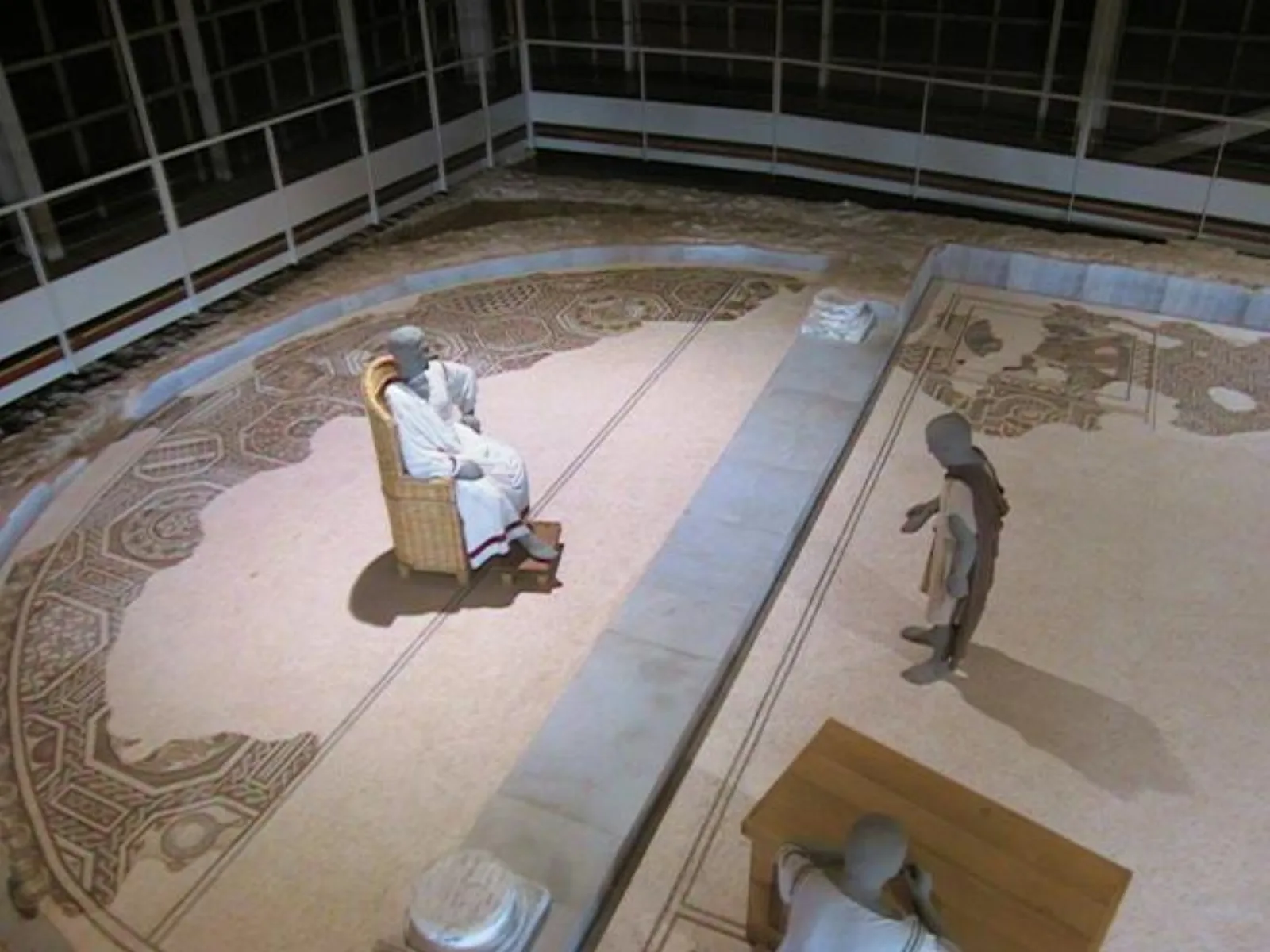
Roman wine estate remains have been found throughout the Herault. At Loupian, 15 km from Florensac, the Gallo-Roman villa had its own production. The Loupian museum displays the site’s mosaics, but wine was part of the story too.
Emperor Domitian, in 92 AD, ordered the uprooting of half the vines in Gaul to protect Italian winemakers. Two centuries later, Emperor Probus reversed the decree. The vines came back.
The Middle Ages and the abbeys
After the fall of Rome, monks kept viticulture going. Abbeys held vineyards across the Languedoc. The Abbey of Valmagne, between Villeveyrac and Montagnac (20 minutes from Florensac), is a good example. Founded in 1138, it produced wine for its own needs and for trade. Today, the wine vats still stand in the nave of the church. You can see them on the visit.
Languedoc wines were exported from the ports of Sete, Agde and Narbonne. Not great vintages, but solid and plentiful wines. The reputation was honest, not prestigious.
The Canal du Midi and the boom
In the 17th century, the Canal du Midi (completed in 1681) changed things. Languedoc wine could now travel to Bordeaux and beyond without bumping along rough roads. Production increased.
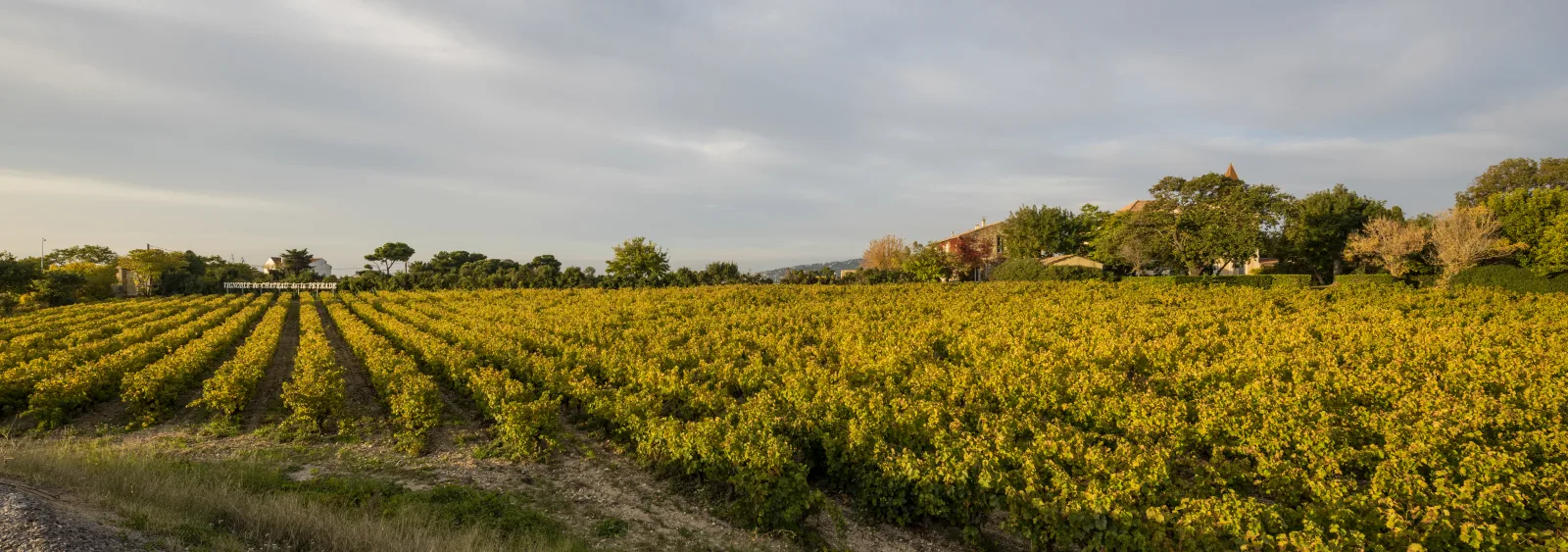
But it was the 19th century that transformed everything. The railway, which arrived in the 1850s, connected the Languedoc to Paris and the northern cities. Demand for cheap wine exploded. The Languedoc became the supplier to working-class France. The plains filled with vines, from Agde to Narbonne, from Beziers to Montpellier.
In Florensac, as in every village around here, wine became the main business. Every family had its vines, its cellar, its mule for the harvest. Ours was no different.
Phylloxera and the rebuilding
In 1863, an aphid from America, phylloxera, began destroying French vineyards. The Languedoc was hit in the 1870s and 1880s. Within a few years, thousands of hectares were devastated.
The solution came through grafting: French grape varieties onto American rootstocks that were resistant to the pest. The rebuilding took twenty years. The vineyard landscapes you see today date from that replanting.
The revolt of 1907
In 1907, the wine crisis erupted. Overproduction, fraud (cutting wine with sugar and water), collapsing prices. The Languedoc winemakers revolted. On 9 June 1907, in Montpellier, between 500,000 and 800,000 people demonstrated. It was one of the largest protests in French history.
In Beziers, on 20 June, soldiers of the 17th infantry regiment, who were from the region, refused to fire on the demonstrators. The episode has stayed in the collective memory. There is a song, “Gloire au 17e” (Glory to the 17th), that you can still hear sometimes at village festivals.
The revolt led to the fraud law of 1907 and, later, to the creation of the appellation system.
The cooperative cellars
From the 1900s to the 1930s, cooperative cellars multiplied. The one in Florensac dates from 1935. The principle: winemakers pool their harvests and share the cost of winemaking. The buildings are often imposing, sometimes designed by architects, with concrete or stone facades.
My father delivered grapes to that cooperative for decades. My brothers still do. It is a place the family knows well.
The end of table wine
During the second half of the 20th century, the Languedoc produced vast quantities of table wine. Cheap wine, sold in bulk, by the litre. The reputation suffered. The word “Languedoc” on a label did not excite anyone.
The turning point came in the 1980s and 1990s. The European Union funded mass vine-pulling to reduce overproduction. Many growers uprooted their old vines. Those who stayed changed direction: less volume, more quality. New grape varieties (syrah, mourvedre, grenache alongside carignan and cinsault), new techniques, new appellations.
Today
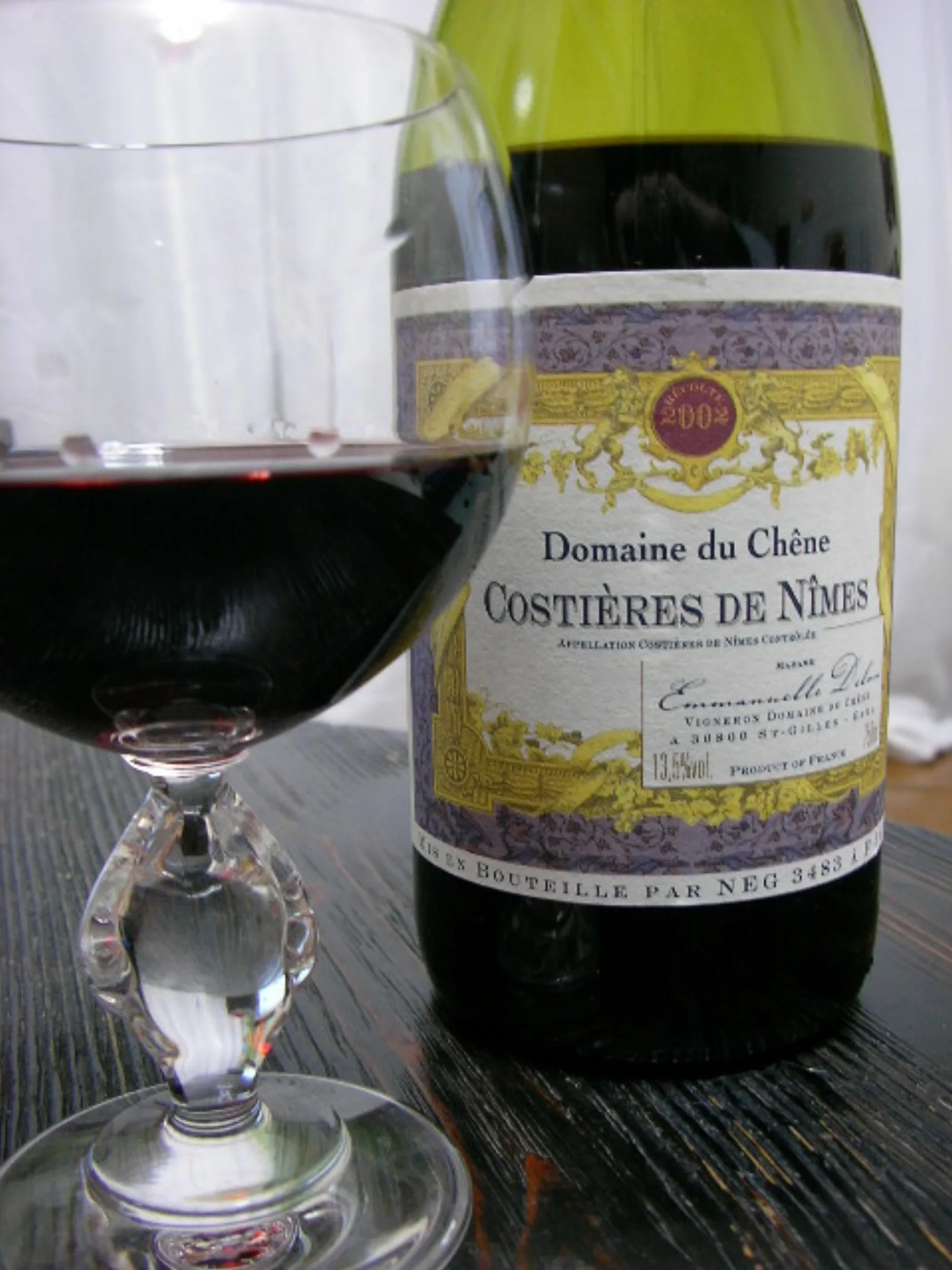
The Languedoc is still the largest vineyard in France by surface area. But it is no longer the same wine. Appellations have multiplied: Languedoc, Picpoul de Pinet, Faugeres, Saint-Chinian, Minervois, La Clape, Terrasses du Larzac. The IGP Pays d’Oc label also produces solid varietal wines.
Around Florensac, we are right in Picpoul de Pinet territory. A dry, crisp white that goes well with the oysters from the Etang de Thau. The Florensac cooperative cellar produces it, and several private estates do too. Pomerols, Castelnau-de-Guers, Montagnac: the neighbouring villages are all in the appellation zone.
Young winemakers are setting up, often organic or biodynamic. My brothers have seen the profession change. Languedoc wine has changed status. It is no longer French viticulture’s poor relation. And when guests ask me what to drink, I send them to the cooperative. It is a five-minute walk.
Practical information
- Florensac cooperative cellar: route de Pezenas, open Monday to Saturday, free tasting
- Valmagne Abbey: visit the vats in the nave, 9 euros, 20 min from Florensac
- Picpoul de Pinet: local dry white, available at every cellar in the area
- Wine route: self-guided circuit between Florensac, Pomerols, Montagnac and Castelnau-de-Guers
Wine is the thread running through the Languedoc for twenty centuries. In Florensac, the family has been part of it for generations. Our B&B is the ideal starting point to explore the cellars and vineyards nearby. Discover our rooms.