Romanesque art in the Hérault: churches and abbeys
The Herault is rich in Romanesque architecture. This is no accident: between the 11th and 13th centuries, the Languedoc was prosperous, pilgrimage routes to Santiago de Compostela passed through here, and monastic orders were building. Dozens of buildings remain, some in villages, others in the middle of nowhere. Here are the ones I recommend from Florensac.
The Abbey of Valmagne
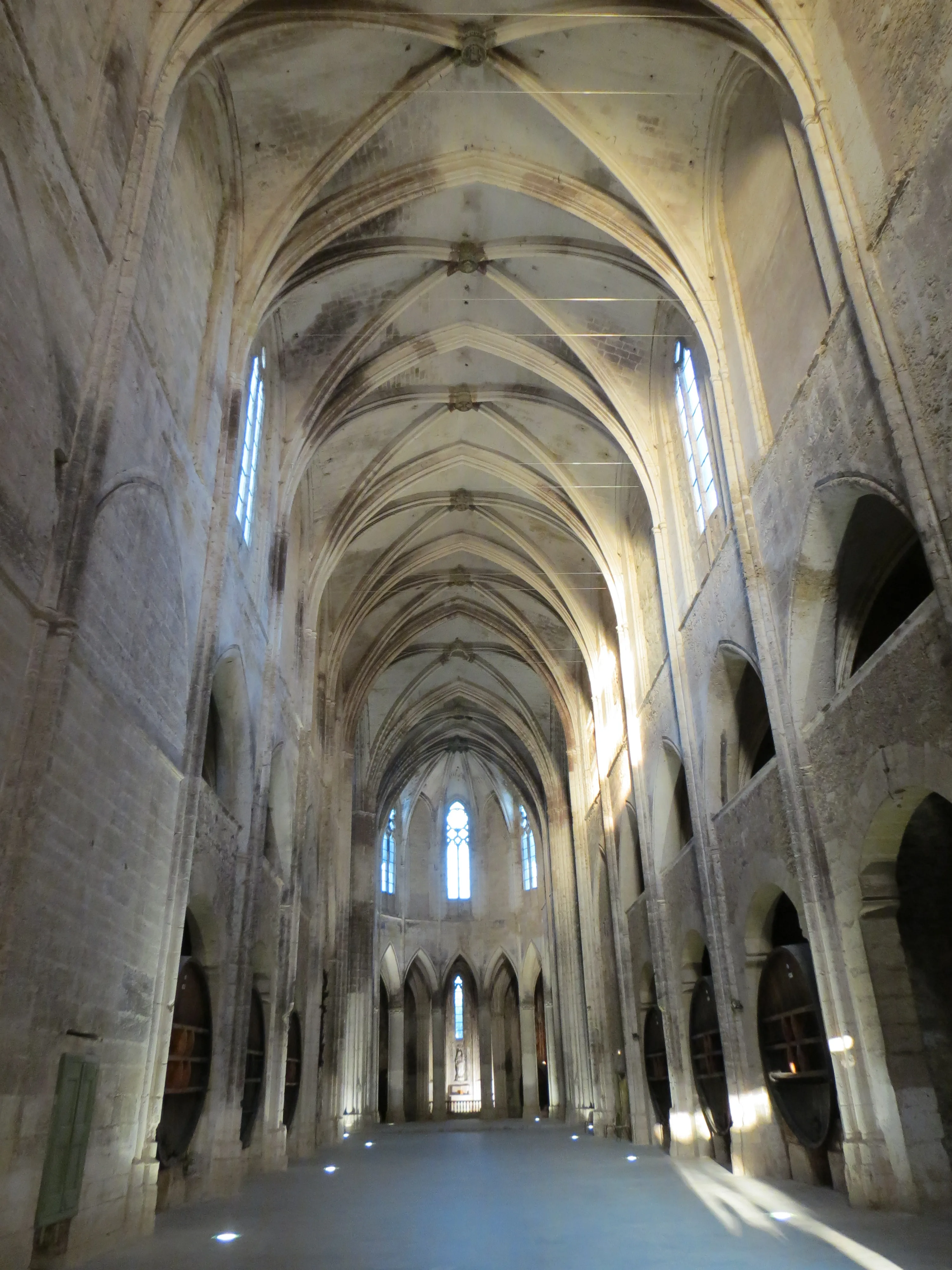
This is the most impressive in the department. Twenty minutes from Florensac, between Villeveyrac and Montagnac. Founded in 1138 by Benedictine monks, then taken over by the Cistercians around 1150, Valmagne is Gothic in its nave (13th century) but Romanesque in its cloister and conventual buildings.
What strikes you on entering are the wine vats. After the Revolution, the abbey became a wine estate. The huge wooden casks stand directly in the nave, between the pillars. You rarely see such a frank mix of the sacred and the profane.
The cloister is beautiful. Romanesque, sober, with twin columns and capitals carved with foliage. The central garden has a basin and box hedges. It is a peaceful place. The monks’ fountain-lavabo, in one corner, is a small piece of grace.
The guided tour lasts about an hour. There is also a restaurant in the former chapter house in summer. The estate still produces wine, available in the shop.
Visit: 9 euros adult, open daily in summer, reduced hours off-season. Check their website before going.
The Abbey of Saint-Guilhem-le-Désert
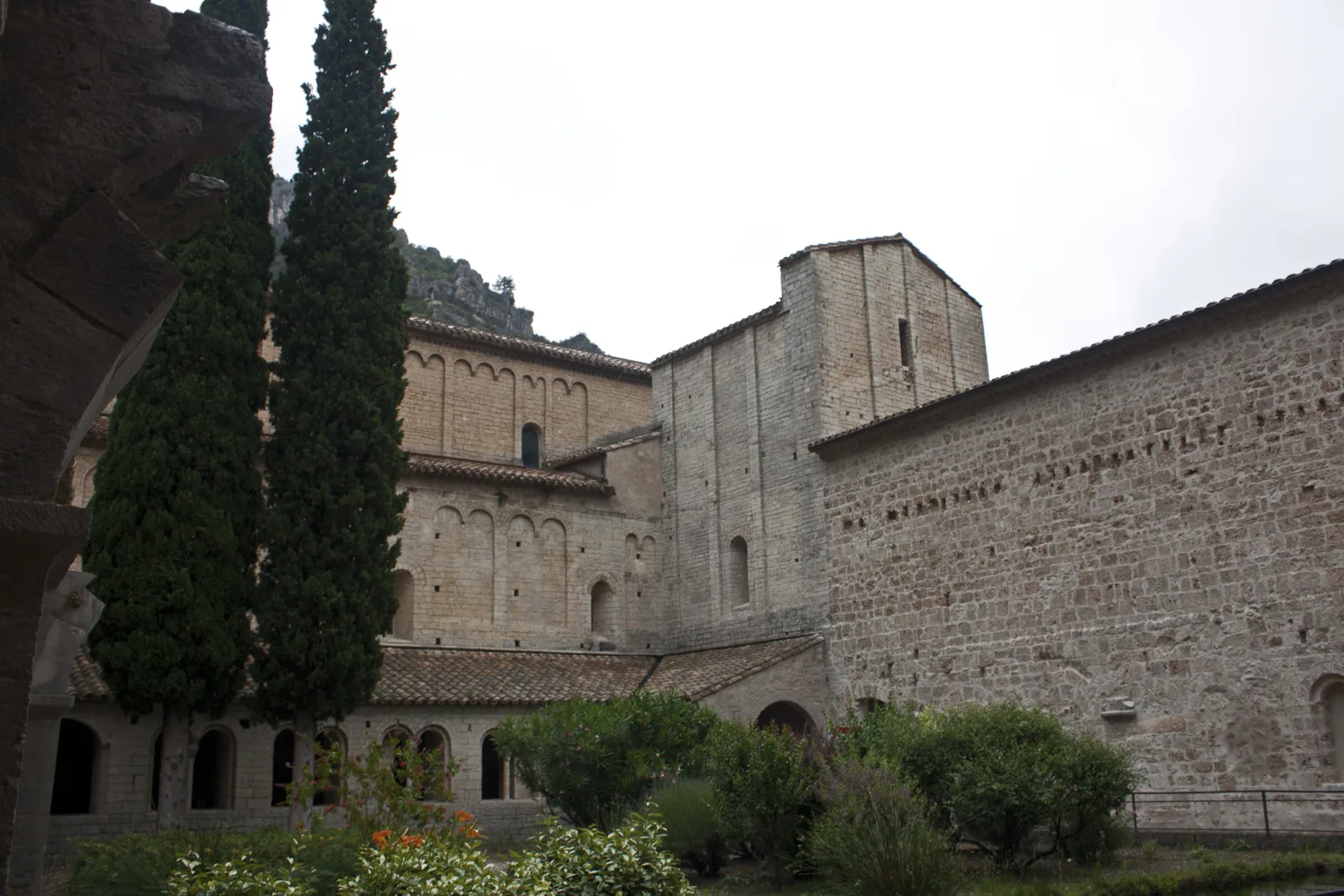
The Abbey of Gellone, founded in 804, is one of the oldest monasteries in the Languedoc. It is a UNESCO World Heritage Site as part of the Routes of Santiago de Compostela.
The abbey church is Romanesque, massive, with an austere and luminous nave. The apse, seen from outside, is harmonious. The cloister has had a rough time: part of it was sold in the 19th century and is now at The Cloisters museum in New York. What remains at Saint-Guilhem is more modest but worth visiting.
The village around it is classified among France’s Plus Beaux Villages. The whole setting is coherent. Allow 1 hour from Florensac.
The Church of Saint-Jean-Baptiste, Florensac
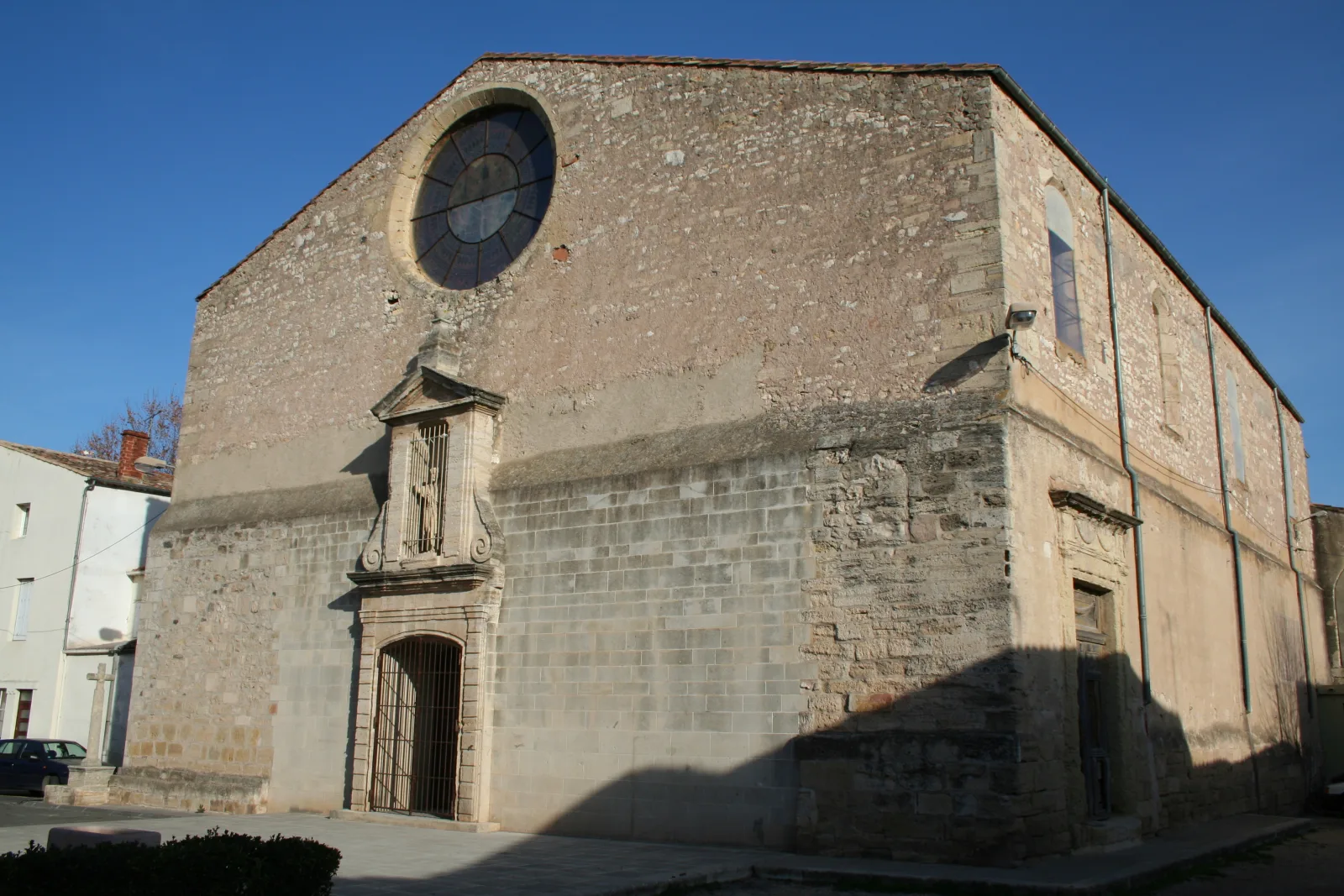
No need to go far. The church in Florensac, two minutes from the house, is a 14th-century fortified building with older Romanesque elements. The octagonal bell tower is visible from across the plain. Inside, the proportions are pleasing, with Baroque altarpieces added later.
It is not a masterpiece of pure Romanesque art, but it is a good example of those Languedoc churches that have crossed the centuries by adapting. The fortifications here are not decorative: the Wars of Religion left their mark.
The Cathedral of Maguelone
On a strip of sand between the sea and the lagoons, 30 minutes from Florensac. The former Cathedral of Maguelone is a 12th-century Romanesque building, squat and solid, in an unlikely setting. You reach it by a footpath (or a small train in summer) through vineyards and tamarisk trees.
The interior is plain. Thick walls, narrow windows: you sense it was also a place of defence. The portal has an interesting carved tympanum. Outside, the site is quiet, with views over the Etang de l’Arnel and the sea. You can picnic on the lawns around it.
Access: free, car park 800 m away, footpath or small train (2 euros).
The Church of Saint-Saturnin-de-Lucian
A small village at the foot of the Larzac plateau, 40 minutes from Florensac. The Romanesque church dates from the 11th century. Nothing exceptional from outside, but the interior has medieval frescoes that are worth seeing. The village itself is pleasant, with a fountain and a few stone houses.
It makes a good stop if you are heading to the Salagou or the Moureze cirque. The two combine easily.
The Chapel of Saint-Nazaire de Roujan
Twenty-five minutes from Florensac, in open countryside between Roujan and Neffies. A small 12th-century Romanesque chapel, alone among the vines. No interior visits (closed most of the time), but the outside is photogenic: the apse with its half-dome, the sculpted modillions under the cornice, and the countryside silence all around.
This is the kind of place you find by getting lost on the small roads of the Languedoc. There are dozens like it in the Herault.
How to recognise them
Romanesque art has a few constants. Round arches (rounded, not pointed). Thick walls. Small windows. Carved capitals, often with plant motifs or fantastical animals. Semi-circular apses. Modillions under the cornices, sometimes with grimacing faces.
In the Languedoc, Romanesque churches often look like fortresses. Crenellated walls, watchtowers, arrow slits. The Wars of Religion left their mark, and many buildings were fortified after construction.
Practical information
- Valmagne Abbey: 20 min from Florensac, visit 9 euros, open daily in summer
- Saint-Guilhem Abbey: 1 hour drive, abbey free, cloister 6.50 euros
- Florensac Church: 2 min walk from the house, free access
- Maguelone Cathedral: 30 min, free access, car park 800 m away
- Saint-Saturnin Church: 40 min, free access
- Best time: all year round, but the stone looks best in low-angle light (early morning or late afternoon)
Romanesque heritage is everywhere in the Herault. Just push open a village church door and you will find some. From Florensac, the finest sites are less than an hour away. Discover our rooms.
You might also like