Saint-Guilhem-le-Désert and the Hérault gorges
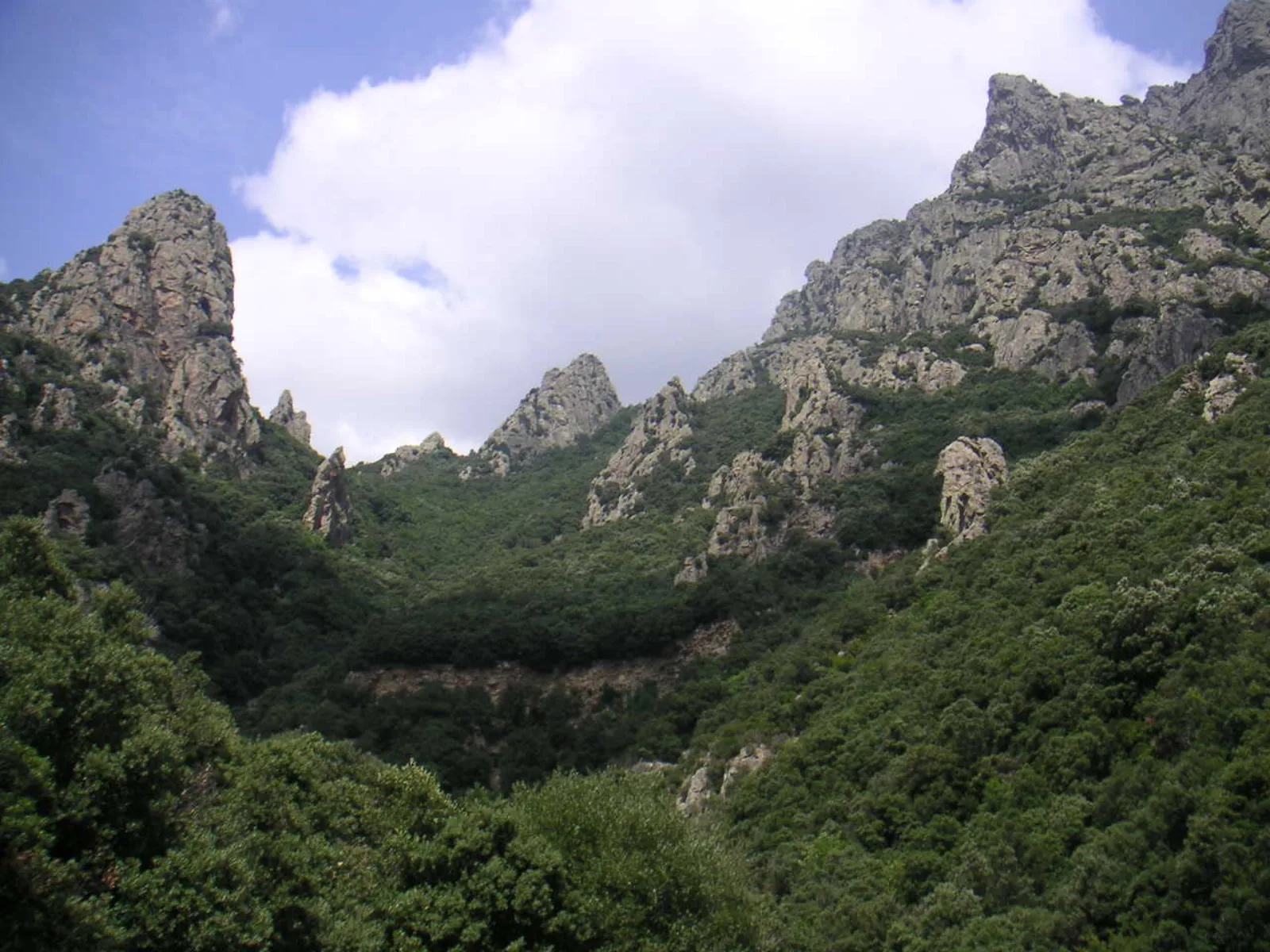
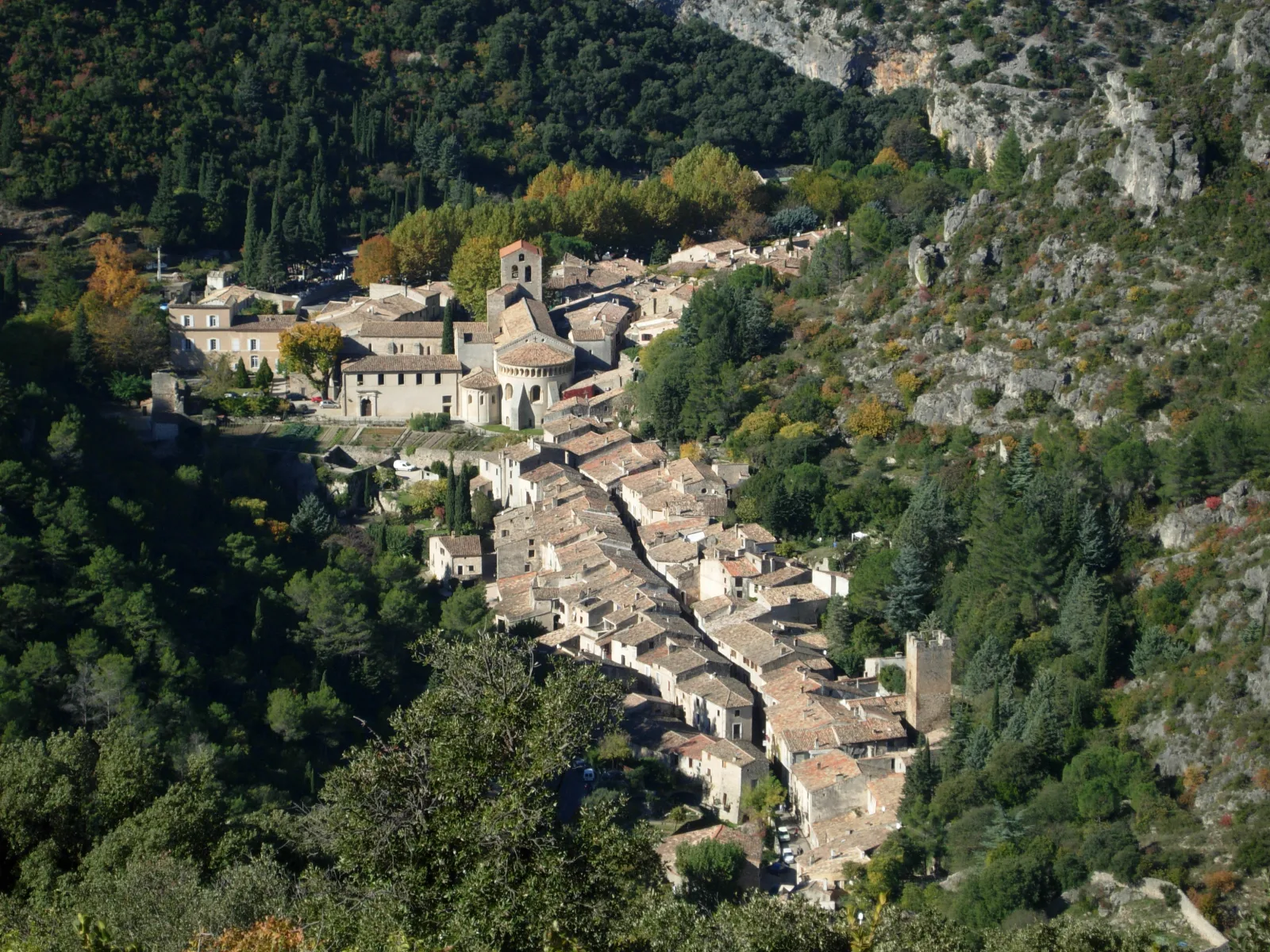
Saint-Guilhem-le-Désert is an hour from Florensac, in the Hérault gorges. It’s one of the “Most Beautiful Villages of France”, and for once the label is deserved. A medieval village squeezed between cliffs, an 8th-century abbey, and gorges where you swim in turquoise water. It’s worth the drive.
The village
You arrive on a narrow road that drops into the valley. The village appears suddenly, wedged at the bottom of the gorges. The houses are golden stone, the roofs are stone slabs, and the lanes climb in steps. No cars inside. You park at the top (paid, 5 euros per day in summer) and walk down.
The main street is short. A few shops, a cafe or two, old doorways. It’s not big, but it’s dense. Every side lane reveals a stretch of cliff, a garden, a fountain. The village is still alive: about thirty permanent residents, a school, a town hall.
The plane tree on Place de la Liberté, planted in 1855, covers half the square. It’s the gathering point. The cafe terraces sit underneath.
The Abbey of Gellone
The abbey is at the far end of the village. Founded in 804 by Guilhem, a companion of Charlemagne, it’s a stop on the Way of Saint James. The abbey church is Romanesque, massive, with a nave that feels very tall for its width. Light enters through narrow windows. It’s one of those places where the silence is tangible.
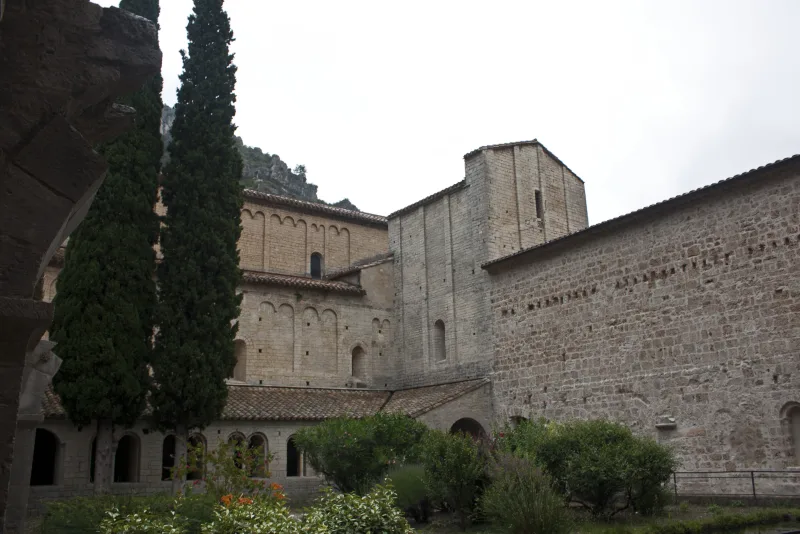
The cloister was largely dismantled in the 19th century and shipped to the United States (to The Cloisters museum in New York). A few arcades remain, but the bulk of it is across the Atlantic. It’s a rather sad story, but what’s left is beautiful.
The abbey is UNESCO World Heritage listed as part of the Routes of Santiago de Compostela. Entry to the church is free. The small museum next door costs a few euros.
The Hérault gorges
The gorges begin downstream of the village. The Hérault has carved a canyon through the limestone, with steep walls and translucent green water. The best-known spot is the Pont du Diable, 4 km from the village.
The Pont du Diable is an 11th-century Romanesque bridge, one of the oldest in France. Below it, the river forms natural pools where everyone swims. The water is fresh (even in August, expect 18-20 degrees) but it’s one of the best swimming spots in the region.
In summer, it gets very busy. Arrive early (before 10am) to find a spot. There’s paid parking (6 euros in season). Lifeguards supervise the main swimming area.
Walking
Several paths start from the village or the Pont du Diable. The classic one climbs above the village along the Fenestrettes trail, carved into the rock. You get views over the gorges and the village below. Allow 1.5 hours return, with a fair amount of climbing (bring water and decent shoes).
For an easier walk, the path along the Hérault between the Pont du Diable and the village is flat and shaded. About 45 minutes on foot, pleasant.
The Clamouse cave
Two kilometres from the Pont du Diable, the Clamouse cave is open all year. It’s a cave with formations (stalactites, stalagmites, calcite curtains). The guided tour lasts about 1 hour 15 minutes. The formations are varied and well lit. Inside temperature is a constant 17 degrees, welcome when it’s 35 outside.
Where to eat
Choices in the village are limited and prices are slightly inflated (tourist village). Le Bout du Monde, at the far end, does simple, decent plates with a nice terrace. For a picnic, buy your supplies in Florensac before you leave. That’s the smarter option.
At the Pont du Diable, a seasonal outdoor bar serves sandwiches and drinks.
Getting there from Florensac
Allow one hour via the D32 then the A75 (toll-free) exit Gignac, then the D27. The road from Gignac follows the gorges and the scenery is already beautiful. Avoid Sundays in high summer, the village gets packed.
An ideal day: leave in the morning, swim at the Pont du Diable (arrive before 10am), visit the village and abbey in the middle of the day (when it’s too hot to stay in the sun), head back in the late afternoon.
Practical information
- Distance from Florensac: 55 km (1 hour by car)
- Village parking: paid in season (5 euros/day), 5 min walk from the centre
- Abbey of Gellone: church free entry, museum a few euros
- Pont du Diable: swimming free, parking paid (6 euros in season). Lifeguards in summer
- Clamouse cave: guided tour 1h15, around 14 euros/adult. Open all year
- Tip: arrive early in summer. Bring water, walking shoes if hiking, and a swimsuit
Saint-Guilhem is the first day trip I recommend to our guests. It’s a bit further than the other outings, but it’s a feast for the eyes. The village, the gorges, the swimming: it’s a full day, and you come home feeling like you’ve been somewhere truly special. Discover our rooms.