La tielle sétoise: Sète's octopus and tomato pie
The tielle is a round pie, with a thick, soft dough, filled with pieces of octopus in a spiced tomato sauce. It’s the dish of Sète. You see it everywhere in town: in bakeries, at markets, in restaurants, and by the canal.
From Florensac, Sète is 25 minutes away. That’s reason enough to go and eat one.
Where it comes from
The tielle comes from Italy, from the region of Gaeta (between Rome and Naples). Italian fishermen who settled in Sète in the late 19th century brought the recipe with them. The “tiella” of Gaeta was a seafood pie. In Sète, it became the octopus tielle.
The recipe was passed down in Italian fishing families from the upper quarter of Sète, around the Saint-Louis church. Adrienne Virduci is often credited with popularising the tielle in the 1930s and 1940s. Her descendants still make them.
It’s a story of immigration and adaptation. The Italians arrived with their recipe, Sète adopted it, and today it’s a fully local specialty. Nobody thinks of Italy when eating a tielle in Sète.
What’s inside
A good tielle is:
- An enriched bread dough (flour, water, olive oil, a little yeast), thick, slightly sweet, almost brioche-like
- Octopus cut into pieces, not too small
- A well-seasoned tomato sauce: tomato paste, chilli, garlic, parsley, a drizzle of olive oil
- Sometimes cuttlefish instead of octopus, or a mix of both
The pie is baked until the crust is golden. It’s eaten warm or at room temperature. Not hot from the oven, not cold from the fridge. Warm.
Where to eat it
In Sète
There are plenty of options. These are the ones that come up most often:
- Maison Cianni: the oldest. An Italian-origin family, recipe passed down through four generations. Rue Honoré Euzet
- La Tielle à Dédé: at the covered market, Les Halles de Sète. Good format for takeaway
- Les Halles de Sète: the covered market has several stalls selling fresh tielle, especially in the morning
Prices vary by size. Expect 4 to 6 euros for an individual tielle, 10 to 15 euros for a large one (4-6 servings).
At coastal markets
You’ll sometimes find tielle at markets in Agde or Marseillan. It’s less common at inland markets. For the real thing, go to Sète.
The sizes
Tielles come in several formats:
- Individual (10-12 cm diameter): for one person, a good lunch with a salad
- Medium (20 cm): for 2-3 people, to share
- Large (25-30 cm): for a table of 4-6, ideal as a starter or for a picnic
As a starter, one individual per person. As a main, you’ll need a bit more. Locals cut it into slices like a pizza.
How to eat it
Warm, with your fingers or a fork. People in Sète often eat it standing up, walking along the harbour. It’s street food as much as a sit-down dish.
For wine, a chilled rosé does the job. A Picpoul de Pinet works well too, especially if you’re having the tielle as a starter before fish. Florensac is right in Picpoul country, so it’s the natural choice around here.
A light red (a young Languedoc) can also pair well with the tomato sauce, if you prefer.
The tielle festival
Each summer (usually in July), Sète hosts the Fête de la tielle at the harbour. Local makers gather, you can taste different tielles, and vote for your favourite. It’s popular and friendly. If your dates coincide, it’s worth the trip.
Watch out for imitations
In supermarkets, you’ll find vacuum-packed industrial tielles. That’s a different product. The pastry is dry, the filling is thin, the taste is flat. If you want to discover the tielle, buy it from an artisan. The difference is clear.
A good sign: a proper tielle is heavy for its size. The dough is thick, the filling generous. If it feels light, move on.
Sète while you’re there
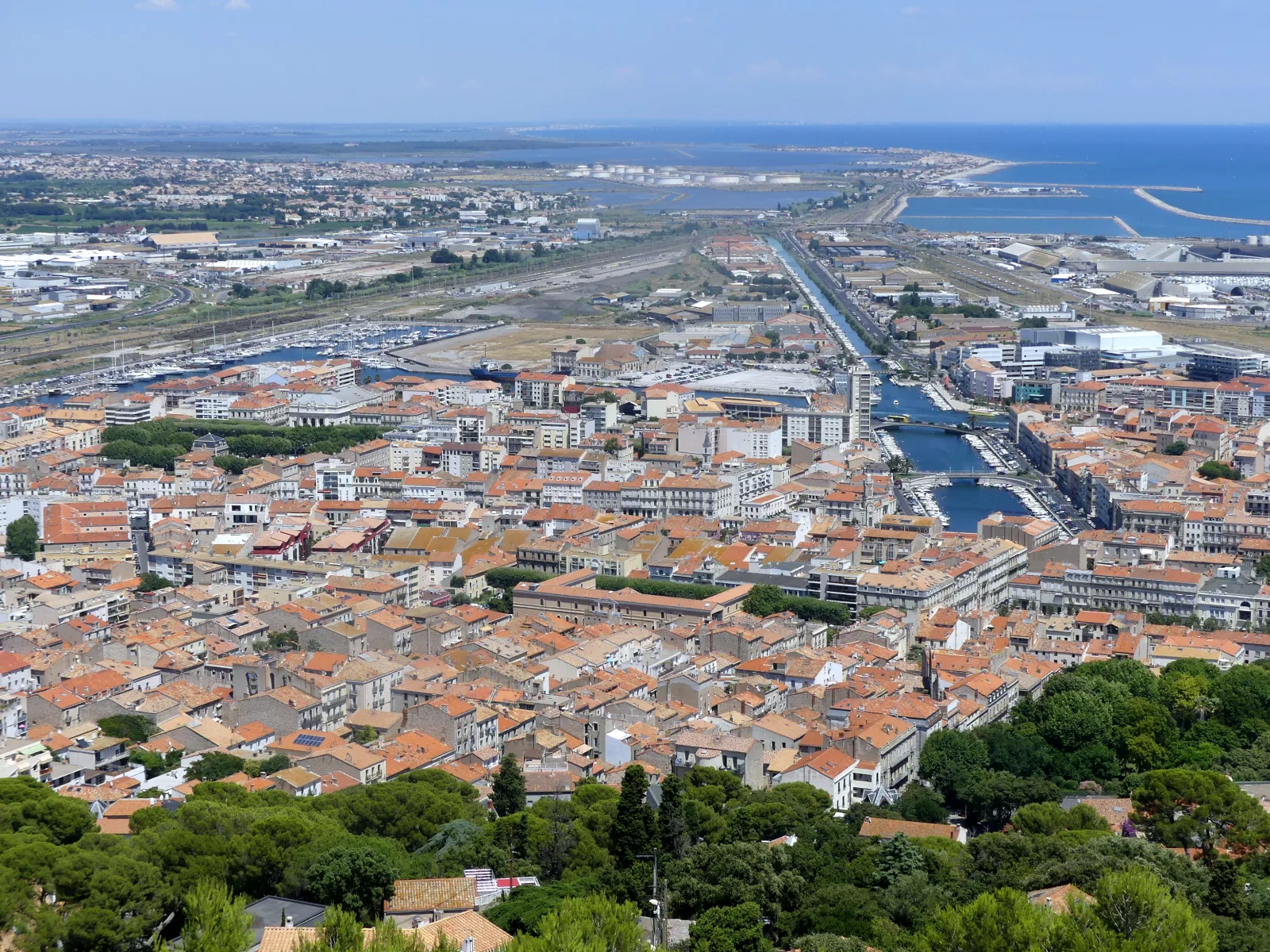
If you go for the tielle, make the most of Sète. Mont Saint-Clair offers a view over the Étang de Thau on one side and the sea on the other. The cimetière marin (Paul Valéry’s cemetery) is worth a visit. The canals through the town centre are a bit like Venice, rougher around the edges. And the jousting tournaments on the water in summer are a spectacle.
Our family has been in the Hérault for over two hundred years. Sète has always been part of our routine. It’s where we go to eat fish, buy a tielle, and walk along the harbour.
Practical information
- Distance from Florensac: 25 km (25 min by car)
- Price: 4 to 6 euros (individual), 10 to 15 euros (large)
- Where: Maison Cianni, Les Halles de Sète, and town-centre bakeries
- Sète market: Les Halles, every morning
- Keeping: 1-2 days at room temperature, reheat in the oven
- Tielle festival: July, at the harbour in Sète
- Tip: eat it warm with a cold Picpoul de Pinet
Sète is a town you should see anyway. The tielle gives you one more reason to go. And from our rooms, it’s a short half-hour drive.