Sète, the singular island: Mont Saint-Clair and seafood
Sète is a place apart. Wedged between the sea, the Étang de Thau and Mont Saint-Clair, it has a character you won’t find anywhere else on this coast. It’s a town of fishermen, canals, grilled fish and strong personalities. You need at least a full day here.
Mont Saint-Clair
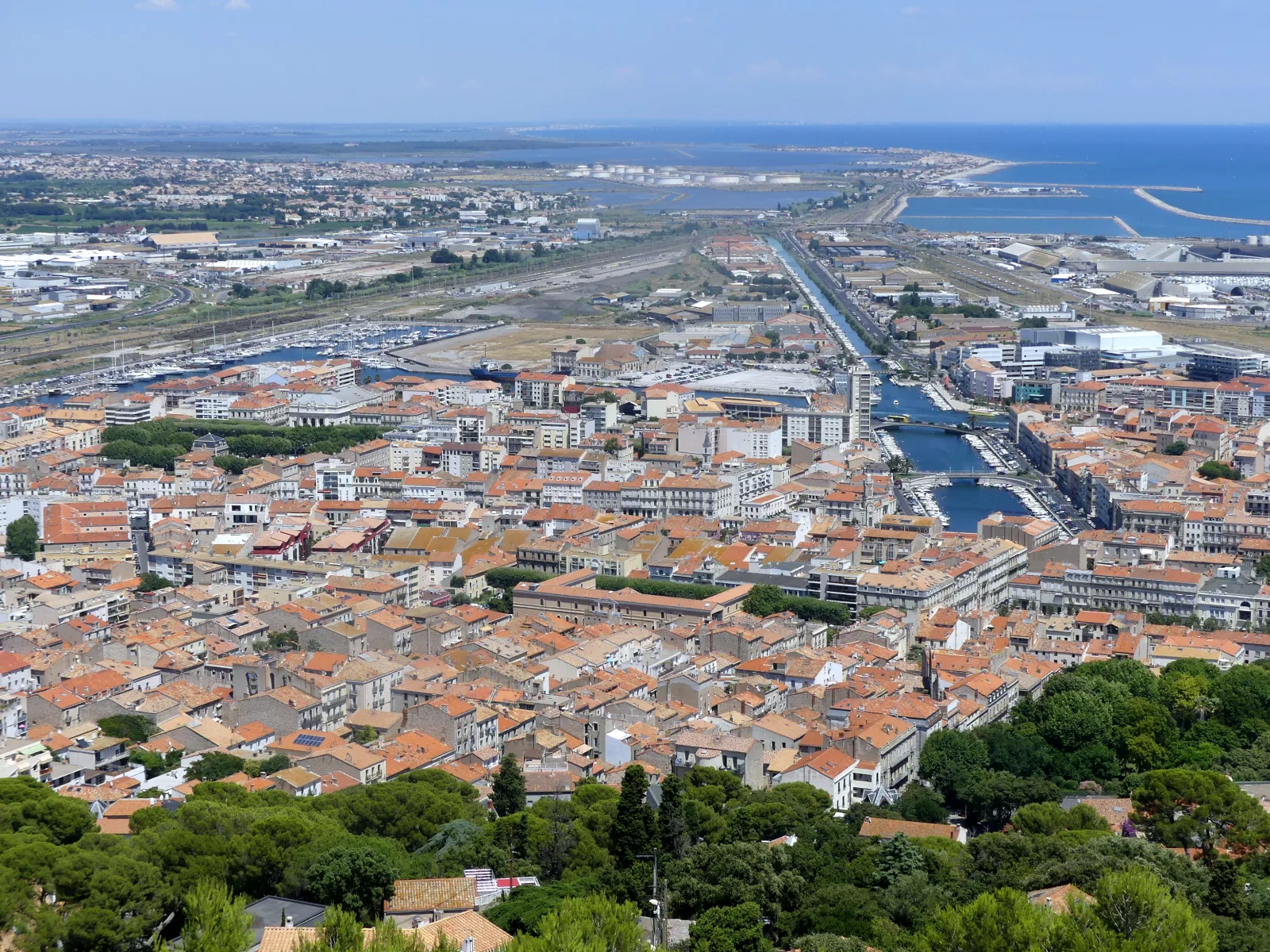
Start here. Mont Saint-Clair tops out at 183 metres, which doesn’t sound like much on paper, but the panorama from the top is striking. On one side, the Mediterranean and the sandy lido stretching towards Marseillan. On the other, the Étang de Thau, the oyster beds and, on a clear day, the Pyrenees.
You can drive up to the viewing point. On foot from the town centre, allow 30 to 40 minutes via the staircases of the upper quarter. It’s steep, but worth the effort.
The canals and old port
Sète is sometimes called “the Venice of Languedoc”. That’s a stretch, but the canals are real enough, with metal bridges, fishing boats and colourful facades reflected in the water.
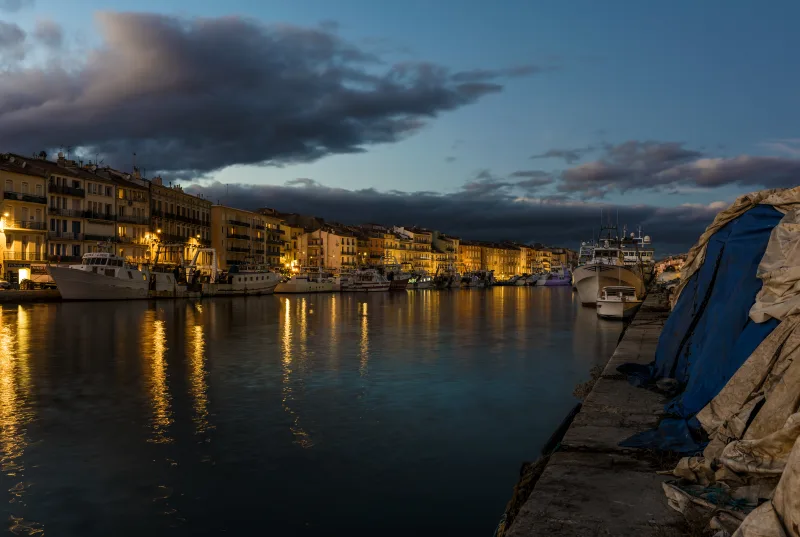
The Canal Royal runs through the town centre. Walk along it to the Môle Saint-Louis and the lighthouse. It’s a simple, pleasant stroll, especially in the late afternoon when the light turns golden.
The old fishing port (La Pointe Courte) is still working. The fish auction runs every morning. You can’t go inside, but you can watch the boats unloading early if you’re an early riser.
Eating in Sète
Sète is a town where you eat well, and fish above all. A few places I know:
La tielle is the local speciality. It’s a round pie filled with octopus in tomato sauce. You’ll find them in every bakery and at the food stalls inside the Halles de Sète. The Halles are open every morning and worth a visit even if you don’t buy anything: fishmongers, cheese sellers, olives, charcuterie.
The restaurants along the Quai de la Consigne (beside the Canal Royal) all serve fresh fish. Prices vary a lot from one place to the next. Check the blackboards and trust your gut.
For a simple meal with your feet in the sand, go to the Plage de la Corniche, on the south side. Several beach restaurants serve grilled fish and moules-frites from June to September.
The marine cemetery and Brassens
Paul Valéry is buried in the Cimetière Marin, the one from his famous poem. It’s a quiet spot with a beautiful sea view. The Musée Paul Valéry, right next door, has his manuscripts and temporary exhibitions.
Georges Brassens was born in Sète and the town appears in many of his songs. His museum (Espace Brassens, route de Mèze) is touching and well put together. You listen to his songs on headphones as you walk through the rooms. Even if you don’t know his work well, it’s worth it.
Water jousting
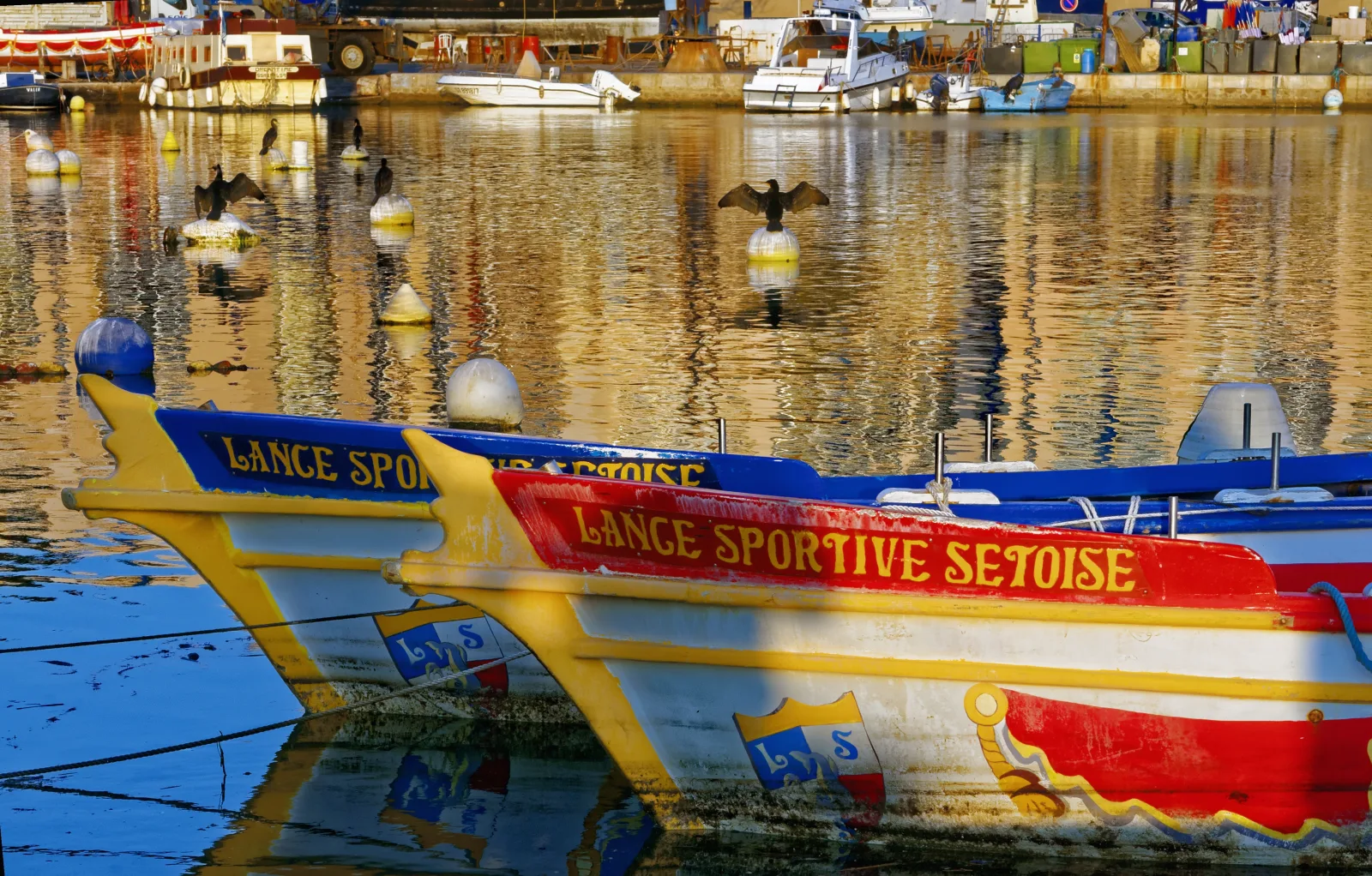
If you’re here in summer (especially around the Feast of Saint-Louis, 25 August), you may catch the Sète water jousts. Two boats pass each other on the Canal Royal, and jousters standing on wooden platforms try to knock each other into the water with lances. It’s spectacular, loud, and the locals take it very seriously.
The Fête de la Saint-Louis lasts a week and is the biggest event of the year. Jousts, concerts, fireworks, bulls in the sea. The town comes alive.
Practical information
- From Florensac: 30 minutes by car via the N112
- Parking: Môle Saint-Louis car park (paid, central) or free park-and-ride on the outskirts + shuttle in summer
- Halles de Sète: every morning, Rue Gambetta
- Espace Brassens: open year-round, adult ticket ~8 EUR
- Musée Paul Valéry: closed Mondays, adult ticket ~6 EUR
- Saint-Louis jousts: around 25 August, free access on the quays
- Suggested time: a full day
Sète has real character. It’s a town that lives year-round, with its fishermen, its markets and its traditions. From our rooms in Florensac, it’s a day out that never disappoints. Discover our rooms.